US & Asia-Pacific +1 800 764 0366 | Europe & Middle East +44 (0)115 980 3800


Home / Alternative Fuel

Alternative Fuel

Alternative Fuel

News:

Hydrogen Technology Expo Europe 2022

Luxfer Gas Cylinders will be exhibiting at the Hydrogen Technology Expo Europe in Messe Bremen, Germany. Hydrogen Technology Expo Europe is a solutions-driven forum that will discuss the development of new technologies to overcome these technical challenges and propel hydrogen into the mainstream for stationary and mobile applications. The event will be held 19-20 October 2022. Please visit Luxfer at Stand 8400.
News:

World Hydrogen Awards 2022

‘Extraordinary’ alternative fuel expertise at Luxfer Gas Cylinders honoured in shortlisting 

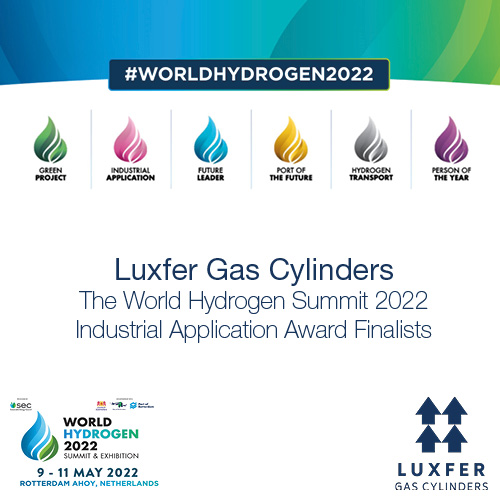
A raft of innovative projects that harness the power of hydrogen fuel for transport have secured Luxfer Gas Cylinders a finalist slot at the prestigious World Hydrogen 2022 Awards, organised by the Sustainable Energy Council (SEC).

The international manufacturer, which has an alternative fuel facility based in Nottingham, is one of just a handful of leading firms lauded in the Industrial Application award category.

Taking place on the first day of the World Hydrogen Summit 2022 in Rotterdam (9-11 May 2022), the awards celebrate the ‘exceptional achievement of companies who are driving the hydrogen industry forward’.

Members of the company’s Nottingham team will journey to Holland to vie for the title of Best Industrial Application against other world-leading firms who, like Luxfer, are making an important contribution in helping to decarbonise one of the most polluting sectors of the global economy.

Luxfer secured a shortlist spot following success in delivering a number of world-first and industry-leading projects, providing bespoke solutions for hydrogen powered buses, boats, trucks and trains. The company was a key partner to deliver the UK’s first hydrogen train, the HydroFLEX, and also delivered the hydrogen systems in fleets of double decker buses operating in London, Aberdeen and other UK cities. 

Mark Lawday, Vice President and General Manager for Luxfer Europe, explains: “For a very long time we’ve been committed to a proactive innovation strategy targeting the alternative fuel market, because we understand the growing importance of clean fuels, energy and sustainability. 

“Our pioneering work in this space pre-dated the government’s pledge that greenhouse gas emissions in the UK will be cut to net zero by 2050 – in fact Luxfer’s engineering teams have been working hard to lead and improve performance, pushing the boundaries for technological capabilities around hydrogen solutions for decades. That work is now starting to come to fruition, and we’re thrilled to have our efforts recognised on a global stage. 

“The exciting thing is that there’s much more to come as governments, investors and businesses work together to boost the hydrogen ecosystem. Innovation is at the heart of what Luxfer has to offer, and we’re looking forward to playing our part in helping towards a cleaner, greener world.”

Luxfer will also be exhibiting at the three-day event too, sharing its credentials in hydrogen storage systems with an anticipated 3,000-plus guests. 

Attendees include Greg Hands, UK Minister for Business, Energy and Clean Growth, who will give a keynote address at the Summit.

Visit Luxfer at the World Hydrogen Summit 2022 from 9-10 May at stand D7 at the Rotterdam Ahoy Arena.

About Luxfer Gas Cylinders

Luxfer Gas Cylinders (www.luxfercylinders.com) is a leading manufacturer of high-pressure composite and aluminium cylinders. More than 70 million Luxfer cylinders in service around the world have an exemplary record for dependability and safety in a variety of applications, including firefighter and first-responder life support, medical, fire extinguishers, alternative fuel, specialty gas, beverage, aerospace, inflation, SCUBA and performance racing. An operating company of Luxfer Holdings PLC (NYSE:LXFR), Luxfer Gas Cylinders is based in Riverside, California, and has manufacturing facilities in the U.S., England, Canada, and China. For more information on Luxfer Gas Cylinders visit: https://www.luxfercylinders.com/.

Issued on behalf of Luxfer Cylinders by The Tonic Communications. For more information contact luxfer@thetoniccomms.co.uk or call 0115 8248254.

News:

The hydrogen revolution – a personal perspective

Written by: Lewis Anderson, Alternative Fuel Systems General Manager, Luxfer Gas Cylinders Europe

In 2015 Lewis Anderson joined Luxfer Gas Cylinders as a member of the purchasing team, unaware of how hydrogen and the demand for alternative fuels would transform his career. Here, Lewis charts his journey with Luxfer, providing a personal insight into how the industry is evolving.

Establishing our alternative fuels capability  

Luxfer was already a global supplier to the compressed natural gas market and although the commercial opportunities in hydrogen were small, it had been an area of interest for many years.

From the late 1990s Luxfer was an innovator in hydrogen tank and valve technology, building on its heritage of being a world leader in lightweight cylinders, producing high-pressure aluminum gas cylinders since the 1930s and carbon composite cylinders since eighties.

When I joined the company, I focused on helping establish a new alternative fuel systems capability at our Nottingham manufacturing site. This would allow us to focus on hydrogen fuel system research and development and meant that we would have the infrastructure and skills in place to partner and supply customers, who like us, were early innovators. The objective was that once the e potential of hydrogen was more visible, we had the ability to meet demand. 

A shift in hydrogen investment and understandingBy 2016 we were working on a small number of hydrogen projects – partnering with coach and bus manufacturer Van Hool to deliver hydrogen systems for two buses in London and five in Europe. Activity was very embryonic, and prototype-led - there remained uncertainty in the market about whether hydrogen was a viable and sustainable alternative – especially compared to diesel and electric solutions. My role shifted to reflect our evolving hydrogen systems offering, to Bus Systems Business Manager and just a year later our foresight began paying off. Hydrogen was gathering prominence and we received an increasing number of enquiries for Luxfer to take on pioneering projects. International brands like Hyundai wanted to collaborate and our valuable sector-specific experience made Luxfer an essential ‘go-to’ partner. This phase was more than ‘just prototyping’ – there was a marked shift in investment, orders and understanding. It was accepted that there was a need for zero emissions fuels and governments were setting targets that they needed to deliver on. 

World-first collaborations

Looking back, I’m incredibly proud to have been part of the team involved with several world firsts. These are projects that are really making positive change to the world we live in, and we have only scratched the surface of hydrogen’s potential. 

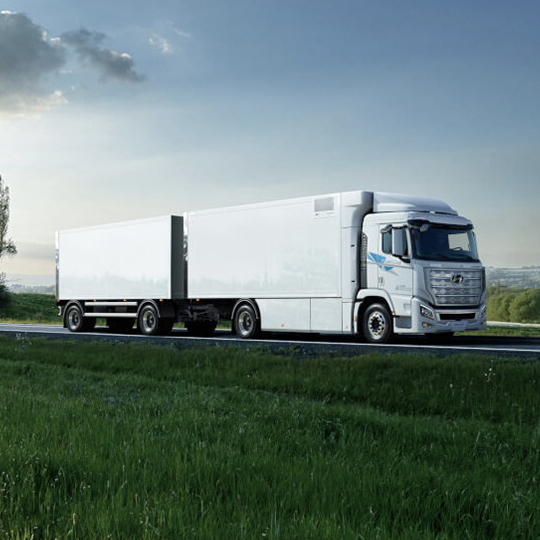
Luxfer’s milestones include the world’s first commercially produced hydrogen trucks. A multi-million-pound project integrating hydrogen technology into more than 50 trucks was delivered in 2020 in partnership with Hyundai, making it the first such green fleet in history. 

Hydrogen powers the 19-tonne vehicles, which is efficiently stored in seven Luxfer G-Stor™ H2 hydrogen cylinders, supplied in a state-of-the-art hydrogen system which holds 35kg of hydrogen.  Each truck features a 190-kilowatt fuel cell.  This storage and drive train combination provides a range of more than 400km before refuelling, which far surpasses the capabilities of battery electric truck technology. 

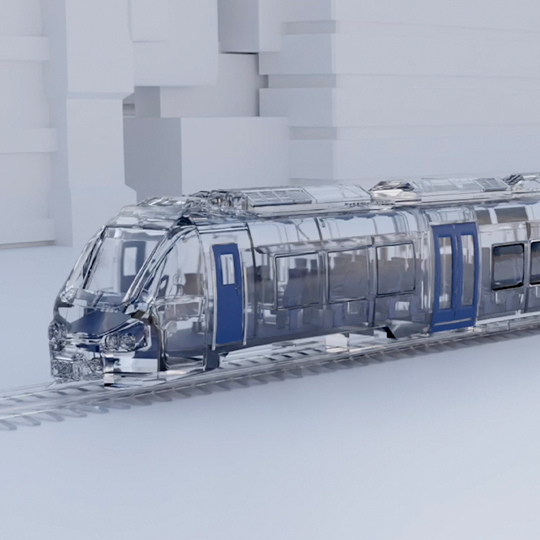
The UK’s first hydrogen-powered train. Unveiled in June 2019, the HydroFLEX project comprises a former Thameslink electric train retrofitted to run using a hydrogen fuel system. Luxfer’s alternative fuel experts worked in close collaboration with Porterbrook and the University of Birmingham’s Centre for Railway Research, which won Department for Transport funding to support the concept. The four-cylinder hydrogen solution was developed and assembled at Luxfer’s UK alternative fuel facility, and in September 2020, the train hit the mainline for the first time.

Offering ‘instant infrastructure’

The hydrogen industry accelerated from 2018, thanks to funding and investments pledged by governments and corporations to make green fuels more accessible.  This continues to encourage OEMs (Original Equipment Manufacturers) to launch hydrogen powered platforms. 

However, although for some time hydrogen has been identified as among the cleanest fuels available, the challenge is to deploy and scale up the required infrastructure to support the refuelling of these vehicles. And so another innovation, based upon the company’s legacy in bulk gas transport, is making ‘instant infrastructure’ a reality.

Last year, we announced an important partnership between Octopus Hydrogen and Luxfer to make heavy goods transportation and the aviation industries cleaner and greener.

Founded upon the expertise and track record of our alternative fuel teams in Australia and North America, who have developed and supplied bulk gas transport solutions, we have designed Multiple Element Gas Containers (MEGC). These 40ft long units can transport over 1 tonne of hydrogen from the point of production to the point of use. 

Nurturing the hydrogen talent of tomorrow

As hydrogen promises to be a critical fuel to reduce carbon emissions and improve air quality, I’m proud of the role I am playing, and I believe we have only scratched the surface of hydrogen’s potential. 

I was appointed Alternative Fuel Systems General Manager in 2020, with responsibility to nurture and develop our alternative fuel team. This involves:

  • bringing in staff at all levels, including several apprentices every year
  • equipping the team with the skills and understanding to thrive in an industry that is still very new and progressive
  • continuing to bring innovative products, solutions and service to our customers.

Looking ahead, we have a sustained and shared focus on collaborating with partners and the local community, alongside supporting our growing 

News:

Hydrogen-electric minibus – powered by Luxfer

Milestone move towards net zero, with vehicle featuring fuel efficient, lightweight system designed by Nottingham-based experts...

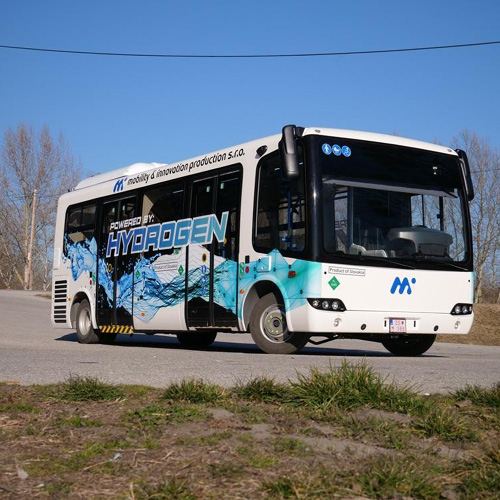
UK, 18 March 2022: The launch of a hydrogen-electric minibus in Slovakia marks an important milestone in delivering zero-emissions solutions for urban transit across Europe – as the most fuel efficient and quickest to refuel vehicle of its kind in the world.

Produced by Slovakian innovators Mobility & Innovation, the eight-metre, 68-passenger H2Bus features a complete alternative fuel system designed and supplied by Luxfer Gas Cylinders. 

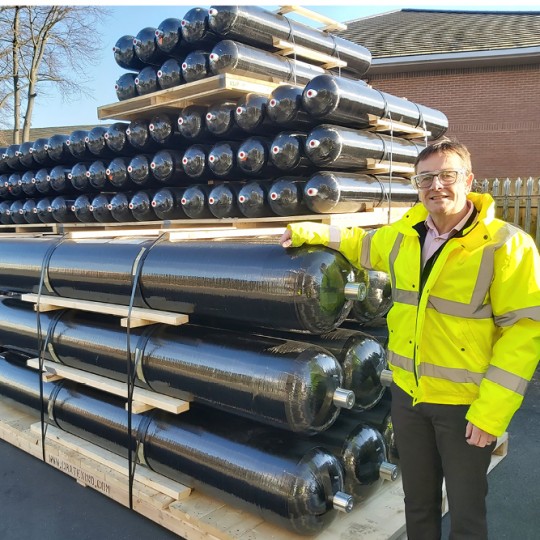
The system contains four of the company’s G-Stor® H2 cylinders alongside valves and regulators, provided in a ‘ready to assemble’ kit. 

Thanks to Luxfer’s unique liner-processing technology, its cylinders are among the highest-capacity, fastest to refill and lightest Type 3 alternative fuel cylinders in the world, making them ideal for transit buses, light, medium and heavy-duty trucks, refuse vehicles and bulk gas transportation modules. 

The system was developed by experts at Luxfer Gas Cylinders’ Alternative Fuel systems site in Nottingham, working alongside worldwide partners to deliver the project in just nine months - around three times quicker than standard clean bus builds.

Requiring just 10.5 kilograms of hydrogen to achieve more than 400 kilometres of range, the H2Bus contains a hydrogen fuel cell system and electric motor. To maintain optimum fuel efficiency, the weight of all components was minimised, and it was designed to deliver the fastest re-fueling of any equivalent bus on the market.

The minibus will now journey across Slovakia, Italy, Austria, Hungary and the Czech Republic, proving the viability of the technology, with the goal of securing commercial orders. 

Luxfer’s European Business Development Manager, Jim Gregory, joined the Bratislava launch. Addressing the 50-plus attendees, which included the Minister for the Economy, industry and media, he said: “This project was designed, built, tested and homologated in much less than one year, in collaboration with a dynamic team of engineers and suppliers from seven different European countries - all despite the huge limitations that COVID caused on travel and logistics.

“We’re extremely proud to see the H2Bus come to fruition – this is significant in helping many more bus operators and governments become another step closer to achieving their zero emissions targets.” 

Janos Onodi, Director, Mobility & Innovation, added: “Working with Luxfer was vital to the success of the project. Their experience in designing hydrogen vehicles gave us the security of knowing we were getting a state of the art and safe design. When pressure came on the timing program their young and dynamic engineering team always stepped up to ensure things were ready on time.”

Luxfer has impressive expertise in the alternative fuel sector, being a key partner in the design and delivery of a raft of industry-first transport projects, including the world’s first commercially produced hydrogen trucks, the UK’s first hydrogen-powered train and the world’s first hydrogen double decker buses, which are in operation across Aberdeen, London and Northern Ireland. 

One of the world’s largest manufacturers of lightweight high pressure cylinders, Luxfer Gas Cylinders is a trusted partner to deliver bespoke alternative fuel solutions, and is a member of the Fuel Cell & Hydrogen Energy Association (FCHEA) and the UK Hydrogen and Fuel Cell Association (UKHFCA).

ENDS

Issued on behalf of Luxfer Cylinders by The Tonic Communications. For more information contact luxfer@thetoniccomms.co.uk or call 0115 8248254.

News:

Hydrogen Conversion Revolution

Despite the huge leaps in commitment for hydrogen as a route to decarbonise transport, hurdles to adoption of the technology remain. 

Here, Jim Gregory, Business Development Director at Luxfer Gas Cylinders, examines the challenges to scale up an entire industry, incrementally, across many unconnected markets – and how conversion projects hold exciting potential.

A first step in hydrogen adoption 

Putting hydrogen vehicles on the road has been led by bus manufacturers, with less widespread availability of hydrogen-powered trucks, boats or trains from the big manufacturers, which can be purchased off the shelf. This means that in these early stages of hydrogen adoption, the first step for many is converting vehicles.

We’re seeing a huge demand for our expertise on conversion projects – a twenty-fold increase in around two years. In addition, the ratio of our design and engineering resource to conversions versus new build hydrogen systems is around 50/50, and we believe this is unlikely to reduce over the next few years.

Nurturing the conversion curve

Fundamental to the hydrogen economy is a gas distribution and supply network that can cope with gradually increasing demand, without being overwhelmed. Conversions support this process because small operators are working with trailblazing companies on projects that will come to fruition very soon - this year onwards.

A focus of growth is captive distribution and logistics fleets. This reflects the increased demand for home deliveries, as a result of the pandemic. The world has changed, and national distribution networks have had to make way for companies based regionally with vehicles that return to the same local depot each day. 

Through retrofitting, operators who feel that hydrogen will be important can convert a pilot fleet based upon ten or 12 vehicles a time, for example. They can then build their capacity annually, slowly, commissioning forward-thinking SMEs to do the work.

The benefits of this approach are:

  • Within a few years the operators that convert will know how to manage a hydrogen-powered fleet.
  • Operators will have developed the supply chain they need for the fuel.
  • This model will provide a steady ramp-up of production and distribution that doesn’t outstrip the capacity in any one part of the supply chain, offering a better solution for the industry in its entirety.
  • Waiting years for new vehicles to come to market will consume the time that remains before all petrol and diesel must go. This presents operators with a requirement to completely replace their fleets in a very short window, concurrently needing to learn how to operate them.
  • It avoids a huge investment from operators to replace thousands of vehicles all at once. 

In summary, projects to convert pockets of existing stock allows companies to build up their fleets, ensure their operations remain profitable, develop their knowledge and maximise the return on the capital that they already have tied up in existing higher emissions vehicles. 

Disruptive SMEs who are getting stuck into delivering conversions of around ten or 12 vehicles - working beside knowledgeable partners - will provide a favourable environment for the hydrogen economy to thrive.

The role of SMEs

A major driving force behind conversions are SMEs, because such projects allow forward-thinking enterprises to advance more quickly than larger OEMs.

SMEs naturally benefit from being more agile and it’s possible for them to convert battery electric or diesel engines to hydrogen relatively quickly, learning as they go and bringing a product to market faster.

An SME is unlikely to have the capital required to develop a hydrogen road vehicle from scratch, and therefore retrofitting is a viable option that gives the opportunity to get involved. They can make real headway and innovate through retrofitting.

This approach paves the way for the ‘Elon Musks of hydrogen’, to give big truck, bus and car makers a challenge. After all, it could take a major manufacturer three years to have a prototype hydrogen vehicle on the road. Luxfer is working with SMEs who can do this within just six months.

Extracting value from capital investment

Some companies need to look to retrofitting in order to root out value from vehicles that were built with a life expectancy that has been drastically reduced by targets to purge the transport network of diesel by 2040.

Trains and the marine industry among the most affected by this. The initial outlay for a new train is extremely high. New trains would be expected to operate for 25 years and then be re-certified for a further 15 years. Thousands of trains were purchased from 2015 onwards and these operators will find it hard to justify abandoning them for a hydrogen version. Those trains could have 30 years more service capability – and therefore converting rail stock to hydrogen is cost effective.

Similarly, marine vessels are high-cost and can operate for decades - making conversion to hydrogen power appealing.

The era for conversions 

We’re seeing demand rise exponentially across Europe and within all transport sectors, from boats, trains, planes, refuse trucks, mechanical handling, vans, refrigerated vans, light trucks, cars and more.

Although Europe and Asia are leading the way, other regions are joining, and we’re involved in many projects in Australia, New Zealand, and North and South America.

Investment is being made from private organisations as well as governments, highlighting that this is the era for conversions. This is particularly relevant for captive fleets such as the regional delivery networks, supermarket vans and even tug boats that operate around international ports. 

Projects are being turned around in as little as six months and this will be the year when the public will see hydrogen vehicles on UK roads – most likely beginning in Scotland with refuse trucks and utility vehicles. 

A cost-efficient solution

Some companies will be required to opt for conversion because they need to extract value from vehicles that were built with a life expectancy that has been slashed by targets to rid the transport network of diesel by 2040.

The impact of this is sector-specific, with trains and the marine industry among the most affected. The initial outlay is extremely high for a newly built train, which would be expected to operate for 25 years and then be re-certified for a further 15 years of service. Operators who procured a train in the last decade – and thousands were purchased from 2015 onwards – will find it hard to justify scrapping it for a hydrogen version. Those trains could have 30 years more good service in them – so converting rail stock to hydrogen becomes cost effective.

Likewise, marine vessels are high-cost units that can operate for decades - making conversion to hydrogen power most appealing.

A growing global appetite for hydrogen retrofits 

At Luxfer we’re seeing demand rise exponentially across Europe and within all transport sectors, from boats, trains, planes, refuse trucks, mechanical handling, vans, refrigerated vans, light trucks, cars – the list goes on. 

Although Europe and Asia are leading the charge in every direction, other regions are catching up. Luxfer is involved in many projects in Australia, New Zealand, and North and South America.

Investment is being secured from private organisations as well as governments, underpinning that this is the era for conversions. This is especially true when it comes to captive fleets such as the regional delivery networks, supermarket vans and even tug boats that operate around international ports. 

Collaborating on conversions and cross-fertilisation

It’s exciting to work with a range of companies who are thinking differently about the capability of hydrogen technology, and Luxfer has partnered on many successful conversion projects, including the UK’s first hydrogen train, HydroFLEX. 

The beauty is that every conversion project is different, and we offer a bespoke design and manufacture service, featuring our G-Stor™ H2 cylinders. 

Of course, converting existing vehicles means working within the constraints of a framework that needs to be adapted. Replacing systems based on a liquid fuel with ones that need to work on gaseous fuel has its inherent challenges. While liquid can be stored in any shape, the optimal shape for high pressure gas storage is still cylindrical.

Advantages of working with Luxfer on conversions includes:

  • We can help our partners through cross fertilization of ideas. A rail company may never collaborate with a shipbuilder, but our engineers have delivered retrofits for both and, those connections and cross pollination can spark interesting and practical concepts. 
  • We support with regulation, derived from our decades of expertise in high pressure gas containment. For example, where directives may not exist, we can explore what applies in parallel markets and consider transferable norms that will deliver against safety requirements. 
  • Our customers reap the benefits of working with a company that has tried and tested experience and understands every component needed to make the optimum recommendations specific to their project. We are supporting SMEs with the hunger to drive this market, and we can help them realise their ambitions. 

An important byproduct is that Luxfer benefits too. Putting our efforts into advancing the market for conversions drives innovation within our own business, helping to shaping our own technological developments. 

For further information on Luxfer’s alternative fuel expertise visit: www.luxfercylinders.com/products/alternative-fuel

News:

The Role of Bulk Gas Transportation to Enable the Hydrogen Revolution

COP26 brought together world leaders to commit to using clean fuels and address the role of hydrogen to help meet net zero targets. Here, Business Development Manager at Luxfer Gas Cylinders Keith Croysdale examines the challenges and opportunities of the hydrogen revolution, and crucially, what the future holds for bulk gas transportation.

The UN Climate Change Conference stimulated debate on securing net zero and keeping the 1.5 degrees warming target within reach, alongside mobilising finance and protecting communities and natural habitats. 

Yet while the summit led to some fresh targets, initiatives and agreements, barriers remain. Described in BP’s Statistical Review of World Energy 2021 report, oil takes the lion’s share of the energy mix at 31%, with coal the second largest at 27%.

Making hydrogen accessible 

With continued reliance on fossil fuels, making progress to wean nations to alternative sources is critical. The factors that will determine this include:

  • Infrastructure  - this will play a key role in the ultimate success of hydrogen take-up, but hydrogen pipelines will may take until the end of the decade to become a reality, and it’s possible that won’t ever reach every hydrogen user. 
  • Other solutions - for instance ammonia has been touted as a medium for carrying hydrogen over long distances, it is highly toxic and handling it presents risks. Masses of poisonous liquid being located in a UK port, such as Southampton, will be a challenging proposition.
  • Green hydrogen - there is an ambition to turn the UK into a green hydrogen-producing hub and in 2021 the Prime Minister set out a vision for the UK to be the ‘Qatar of hydrogen’. But to turn this into a reality, energy companies need to carry as much hydrogen as possible from the production site to the point of use, safely and cost-efficiently. 

Where no gas networks exist, bulk gas transportation cylinder systems help local governments, energy firms and gas distribution networks meet demand, and we believe bulk gas transportation modules are the only solution that is broadly viable.

How hydrogen is making waves 

Bulk gas transportation (BGT) isn’t only applied to lorries and trailers, and Luxfer is working in a range of industries to innovate at moving hydrogen to where it’s most needed. Around coastal cities, as an example, BGT ships can deliver hydrogen across the waterways, and smaller vessels can then transport the fuel via estuaries to depots and fillings stations.

This kind of marine solution means vast quantities of hydrogen can be moved into densely populated areas – without worsening congestion and adding to the pollution challenges on the in-demand UK road network. This issue is particularly important when it comes to getting hydrogen into major cities. 

There are key differences for hydrogen fuel over oil and gas, specifically:

• The model for production and distribution will not be as centralised. Hydrogen is a departure from giant refineries transporting over hundreds of miles, huge pipelines from overseas, and a single interconnected gas network. 

• Producing hydrogen will be localised, with hundreds of hubs in the near future spanning UK regions, towns or even factories. Hydrogen will, for the most part, be made less than 50 miles from where it will be used. The hydrogen ecosystem planned at Thames Estuary, for example, can deliver supply via the river into central London.

Ports, including Antwerp, which is the biggest port area in the world, have announced decarbonisation plans. Directly delivering hydrogen fuels via BGT ships will support them in meeting sustainability targets, and this is particularly desirable where the vessels themselves are powered by zero-emission systems.

Alternative fuel expertise at Luxfer is powering the world’s first hydrogen work boat, in partnership with Compagnie Maritime Belge (CMB), which is also based in Antwerp. And we’re working on the world’s first hydrogen tugboat for Antwerp Harbour.

These are just a handful of the hydrogen projects that will help decarbonise the sector, but it will be 2023/24 when people will begin to see this change.

Innovating in cylinder technology

Innovation is at the heart of Luxfer, and we have applied our trusted, proprietary technology to the bulk gas transport market in the form of our Type 3 cylinder.

This cylinder features a Luxfer-manufactured aluminium liner, fully over-wrapped with aerospace-grade carbon fibre. Because our Type 3 cylinder is heavier than a Type 4, this might seem counterintuitive to using a Type 4 cylinder with a polymer liner. However, the high thermal conductivity of our aluminium liner removes heat from the gas generated during the filling process. The heat produced in a fast-fill could damage a Type 4 polymer-lined cylinder. To circumvent this you’d need to chill the gas or slow down the filling time – and companies want a speedy turnaround. 

With Type 3 technology, all of the hydrogen involved in the system can be utilised, with no wastage, so they are the right solution because they are more robust, fill faster, won’t leak, and therefore they increase the asset value of the entire system. Plus, Luxfer’s G-Stor™ cylinders are among the highest-capacity, lightest-weight Type 3 alternative fuel cylinders in the world.

Ensuring unrivalled safety and quality

High pressure gas containment demands the utmost standards of safety and quality, and our proven track record is why Luxfer is leading the market. 

We have an 80-year history in cylinder technology, with our presence in the alternative fuels sector underpinned by considerable legacy in healthcare. We produce the smallest and most lightweight oxygen cylinders – over 70 million of which are in operation across the globe.

Our success in providing alternative fuel systems is not new, in fact this is our third major exploration of the hydrogen market. It means our latest designs are based on the work of Luxfer engineers from 15 years ago, updated to embed the very latest in cylinder technology. We’ve essentially been a sleeping giant for two decades, putting in the work behind the scenes and applying what we’ve learnt along the way, honing our capabilities so we’re ready.

The landscape is now hugely competitive. Some companies are new to hydrogen storage but it’s challenge because they are tasked with developing quickly the know-how Luxfer has evolved through 80 years.

A fast-growing market for hydrogen solutions

There is a real opportunity for the hydrogen revolution to gather momentum, which is exciting, and the demand we’re experiencing underpins this. We’re now at the point of bringing a viable solution to market, with a credible technology that is in its infancy, and will increase exponentially from next year. 

Although there is good momentum our lead time is due to a robust programme of testing and approval to meet the highest safety standards. Luxfer teams in Canada, America and England are collaborating as part of a significant team effort to design and produce our BGT systems. It’s true co-creation.

Naturally other companies want to get involved and we view this positively because it nurtures innovation and will further advance the hydrogen revolution.

For instance, we’re involved with a number of organisations that are pioneering the adaption of internal combustion engines to work on 100% hydrogen, which is a completely difference proposition for fleets around the world.  

The technology is evolving every day to create an environment that will allow a hydrogen economy to prosper. While we have made huge strides, Luxfer isn’t stopping. We have an ambition to push this technology, helping deploy hydrogen on a game changing scale - safely of course - and we have the right expertise to do it.

News:

Hydrogen Boats

Ships are currently responsible for 3% of all greenhouse gases. This might not seem high, but this is projected to grow by up to 50% if the shipping industry continues on its course. Other transport industries such as automotion, public transport and rail have already made significant steps towards cutting their reliance on fossil fuels, so it only makes sense for maritime vehicles to follow suit.

Fortunately, there is a lot of opportunity for alternative fuels to flourish in this industry, hydrogen being one of the main contenders. In 2017, the world’s first self-sufficient hydrogen-powered boat was launched, and innovations in boat design have continued to develop.

What is a hydrogen powered boat?

A hydrogen powered boat uses hydrogen as a source of energy to drive an electric motor. The on-board hydrogen fuel system draws hydrogen from storage cylinders into fuel cells, where the hydrogen is converted into energy. This energy feeds into a battery pack which in turn powers the motor.

What are the benefits of using hydrogen as a fuel for ships?

There are several propulsion methods that can be used to power ships. Of course, the greenest, cleanest method is wind power, used by sail boats. However, this option is not viable for commercial shipping vehicles because of its slow speed and unreliable nature.

Hydrogen has a number of benefits over alternative fuel sources, including:

  • The only emission created by the vessel is water vapour - therefore zero carbon emissions are created by the vehicle
  • Hydrogen fuel systems can be combined with on-board wind and solar technology maximise sustainable energy sources
  • Research shows that hydrogen is more efficient than battery-only systems in a number of ways
What are the challenges of using hydrogen as a fuel for ships?

The biggest challenge to overcome when it comes to rolling out hydrogen fuel solutions across shipping worldwide is storage. Because ships are not able to refuel at sea, large quantities of hydrogen must be stored on board at controlled temperatures. This takes up a lot of space, which may limit the amount of cargo ships can carry.

The good news is that there are solutions...

Hydrogen production and storage

Currently, most of the world’s hydrogen is produced using fossil fuels. Obviously, this is not desirable for long-term global hydrogen usage. While hydrogen enables the vehicle itself to be zero-emission, the production chain still has a carbon footprint.

Fortunately, there are some alternatives.

The first is electrolysis. The crucial thing about this method of hydrogen production for shipping is that it can be done on-board, using wind and solar energy to create hydrogen on the go. This means that a ship equipped to produce its own hydrogen needs a much smaller space to house the hydrogen storage cylinders, and can ultimately become self-sufficient in terms of fuel.

Another option is to convert the hydrogen into ammonia for storage. Ammonia takes up much less volume than hydrogen, and does not require cryogenic storage. The ammonia can be converted back to hydrogen on-board. Ammonia is toxic to humans and sea life, so extra care must be taken if using this method.

In addition, maritime hydrogen infrastructure is growing. Many prototypes use on-board hydrogen production methods, but mobile hydrogen refuelling stations have also been in use. Waterside refuelling stations are an option for canal and river boats.

Commercial shipping

This is by far the biggest sector when it comes to maritime emissions, and therefore presents the greatest challenge to hydrogen conversion. Research has shown that hydrogen is nonetheless a viable fuel source for shipping.

The chance of success depends on several factors, from government regulations and funding to the technologies available. One report has found that the shipping sector could feasibly completely decarbonise by 2035 using a range of green technology solutions, including hydrogen.

Scalability is a problem for large shipping vessels, as the entire fuel system must be scaled up to produce enough power for large ships. This potentially cuts into storage space and produces additional logistical considerations. That said, a study by the ICCT has concluded that hydrogen fuel systems could be incorporated on-board cargo ships with minimal disruption to normal service if done efficiently.

Thus far, wide-scale prototyping aboard commercial shipping vehicles is in its infancy. But all players agree that conversion to green fuels is essential in order to meet global carbon emission goals.

Meanwhile, smaller ships are being used as test subjects for hydrogen fuel with a great deal of success.

Research vessels

The Energy Observer is the world’s first hydrogen fuel cell boat, launched in 2017 and carrying Luxfer hydrogen cylinders on board. It is essentially a floating laboratory, designed not only to use green fuels, but also to perform research into advancing ecological solutions across a range of applications.

The boat is equipped with state-of-the-art wind turbines and solar panels, which allow it to produce its own hydrogen fuel using electrolysis of salt water.

On board it has 200 square metres of solar panels, 1500kg of batteries, tanks for 63kg of hydrogen, electric motors, solid computer-controlled “ocean wing” sails, and a desalinator and hydrogen generator to refuel the hydrogen tanks.

The boat can be powered by wind, but when there is none, it draws on its hydrogen supply for power. This supplies the boat with motive power and cabin power for heat and electricity. When there’s wind, the solar panels recharge the batteries and make new hydrogen. It’s a highly efficient and completely sustainable design, paving the way for more vessels to adopt this technology.

Recreational boats

Yachting relies heavily on fossil fuels. A superyacht is one of the most carbon-intensive vehicles on the planet. Therefore, moving the luxury leisure yacht industry towards alternative fuels is key to meeting global carbon goals.

It’s recently been speculated that Bill Gates has purchased a hydrogen powered superyacht, and research in this field is showing that hydrogen is a viable option.

A number of manufacturers are working on designs that promise to make recreational yachting a much greener activity, including Yanmar. In collaboration with Toyota, they are embarking on the development of a hydrogen boat fuel cell. The design is based on the technology already at use in Toyota’s hydrogen car.

Meanwhile, Dutch design studio Sinot Yacht Architecture & Design has been working on a liquid hydrogen yacht prototype. Aqua is a 360 foot superyacht, and was presented at Monaco Yacht Show in 2019.

Industry specialists are predicting that these prototypes will pave the way for a widespread roll-out of hydrogen leisure craft, which could become a realistic commercial proposition within 3 to 5 years.

What part does Luxfer play?

Switching maritime vessels to alternative fuels is essential if we are to meet global zero-emission goals. Research suggests that complete decarbonisation of the industry could be achieved by 2035. Hydrogen is proving to be a major contender in this arena, although it does not come without its obstacles.

Research and technological innovation are already making inroads, and positioning hydrogen as the go-to fuel for commercial shipping, research and recreational craft. One of the major challenges is designing a way to safely and efficiently store hydrogen on boats without compromising storage space.

At Luxfer, we’re at the forefront of this movement, developing products designed to meet the challenges faced by maritime industries. From our G-Stor H2 carbon composite cylinders to complete hydrogen fuel storage systems, we’re leading the way in progessive product design - and we’re excited for what the future holds.

News:

Hydrogen Trucks

In order to reduce our carbon emissions and look towards building a sustainable future for ourselves, the EU has adopted new HGV emission targets that are designed to meet carbon-neutrality by 2050.

It has been reported that heavy duty vehicles are responsible for around a fifth of CO2 emissions from road transport in the EU, and 6% of EU carbon emissions overall. Therefore if we want to achieve carbon-neutrality then the entire transport sector needs to change the way it operates.

One solution to help cut emissions is to replace fossil fuels with hydrogen fuel. Many people are citing hydrogen as the fuel of the future, predicting that 50,000 hydrogen-powered buses and 350,000 hydrogen-powered trucks will be on the motorways by 2030.

What are the government aims?

The objective is that by 2030 truck CO2 emissions will be cut by a third from 2019 levels with the help from green hydrogen fuel. Governments are offering up to 75% lower road tolls for fuel efficient vehicles, and introducing higher taxes and diesel ban threats on those that are not eco friendly. In addition they are working with suppliers to help fund innovative climate projects, and in the UK electric trucks and hydrogen-powered buses are set to secure nearly 10,000 UK jobs and save 45 million tonnes of carbon emissions.

As a result, a lot of leading truck-makers are investing heavily in greener fuel, and globally, hydrogen fuel cell trucks are seen as a key solution for running clean commercial vehicles.

What are hydrogen powered vehicles?

Hydrogen powered vehicles work in a similar way to gasoline powered cars, where energy is released by creating a chemical reaction. However, unlike gasoline powered cars they do not emit any vehicle emissions other than water vapour - therefore can help us secure a greener future.

There are two ways in which hydrogen powered cars can create electricity: hydrogen fuel cells or hydrogen powered engines. Fuel cell trucks are filled with hydrogen from the vehicle’s fuel tank, mixing hydrogen with oxygen to create H2O in an electrochemical process. Whereas a hydrogen-powered engines uses combustion as its chemical reaction - burning hydrogen instead of gasoline and converting the hydrogen into mechanical energy.

Are hydrogen powered trucks better than electric?

Hydrogen powered trucks are regarded as the best solution for long haul drivers, particularly vehicles travelling beyond the urban built up areas. This is largely because they overcome some of the limitations that electric vehicles face:

Hydrogen powered trucks

Electric vehicles

Electricity from a fuel cell

Electricity from a battery

Great for the environment

Great for the environment

Short refuelling time

Long refuelling time

Suitable for long distances

Better suited for short distances

Can pull heavier loads uphill 

Struggles with heavier loads uphill

The main characteristics that distinguish hydrogen from electric is the short refuelling time, being able to go long distances, and pulling heavier loads uphill is sometimes a requirement of a job. It would not be practical for a truck fleet going across country to make regular stops to charge and burden the local electricity grid as it does so. That is why hydrogen is the better solution for vehicles such as: trucks, lorries, vans, refuse vehicles, class 8 and HGV, tractors and forklifts.

The pros and cons of hydrogen powered trucks and lorries The pros

There are a lot of attractive characteristics of hydrogen powered vehicles that make them the perfect solution:

  1. No vehicles emissions other than water vapor
  2. Hydrogen is abundant and can be made from renewable energy
  3. Short refuelling times
  4. Long usage time
  5. Perfect for heavy loads
  6. Better fuel economy
  7. No engine noise or visual pollution
The Cons

However, hydrogen fuel cells also come with a set of challenges to overcome in order to be effective, in order for it to work it needs to be green hydrogen:

  1. The technology is expensive at the moment so investment is required
  2. The majority of energy used in the hydrogen extraction process currently comes from non-renewable sources
  3. Requires extremely high-pressure, on-board hydrogen storage
  4. Few places to refuel
How Luxfer can help

Luxfer Gas Cylinders are determined to be part of the change for a better future, setting themselves a 2025 goal to reduce CO2 emissions by 20%. One of the ways in which Luxfer can help protect the environment is by getting involved in projects involving hydrogen fuel.

Luxfer can help overcome some of the temporary limitations of hydrogen fuel by:

  1. Working with OEMS to make efficiencies
  2. Encouraging other companies to invest in renewable energy such as wave, solar, biomass, geothermal and wind
  3. Continue to develop gas cylinders for on-board hydrogen storage, such as the 400. Luxfer G-storTM H2 hydrogen cylinders
  4. Help develop the framework and pipework for seamless integration into Hydrogen powered vehicles, all adhering to stringent quality and safety regulations

One of the challenges hydrogen fuel faces is being able to store it safely. Luxfer works with many commercial vehicle managers around the world to provide them with hydrogen storage cylinders and complete fuel storage solutions, taking responsibility for safety standards and certification. Recently, Luxfer was commissioned by Hyundai to help create the first green commercial truck fleet in history.

Hyundai and Luxfer partnership

Hyundai were one of the first to commit to hydrogen as a replacement energy to fossil fuels. They have already invested heavily in it, planning to put 1,600 hydrogen trucks on the roads in Switzerland by 2025. The chief executive of Hyundai Hydrogen Mobility states that it isn’t enough to produce just one truck “we have to change the entire ecosystem”.

The multi-million-pound project integrating hydrogen fuel cell technology has recently put 50 hydrogen-powered lorries into service for a supermarket chain in Switzerland. The Hyundai Xcient Fuel-Cell trucks are the first green commercial fleet to hit the roads, and will transport supermarket deliveries across the country.

They commissioned Luxfer to provide the knowledge of a complete fuel system in order to bring their ideas to life. Dr. Mark Lawday, director at Luxfer Gas Cylinders explains: “Switzerland is an ideal market for hydrogen-powered trucks, thanks in part because the country generates more than half of its energy from hydropower, so if this can be used to generate the hydrogen then it completely eliminates emissions.

"Each hydrogen truck features a 190 kilowatt fuel cell comprised of seven high-pressure tanks holding around 35kg of hydrogen. This provides a long distance range of about 400km before refuelling is required, which far surpasses the capabilities of vehicles powered by electric.”

When speaking to drivers they commented that there was no need to change up their driving style, instead being more than impressed with the acceleration and quiet engine.

Since development began on the landmark project in Feb 2019, the Luxfer Hyundai design team have developed the framework and pipework for seamless integration into Hyundai’s vehicles, all adhering to stringent quality and safety regulations.

The future of hydrogen fuel cell trucks

With over 100,000 fuel cylinders already in use on over 18,000 vehicles around the world, it’s off to a promising start. The Hydrogen Council estimates there will be 50,000 hydrogen-powered buses and 350,000 hydrogen-powered trucks on the world’s roads by 2030.

Luxfer anticipates that hydrogen fuel cell trucks will become increasingly attractive for heavy goods transportation, as the cost of producing clean fuel drops and greener alternatives to diesel are supported with funding. In fact, Luxfer recently expanded its hydrogen facility in Nottingham, to meet the increased demand for alternative fuel solutions for the transport industry and our collective drive for a greener future. We're dedicated to continue innovating our hydrogen fuel systems to reduce costs, improve efficiency and make storage safe and easy for all users.

News:

Hydrogen Trains

With the increasing impact that the climate crisis has proven to have on our world, the demand to build a more sustainable future and to reduce our carbon footprint has grown significantly.

By switching to hydrogen fuel cells on buses and coaches, we can significantly reduce the carbon footprint of the transportation industry, which will empower nations and local authorities to meet their environmental goals.

Hydrogen fuel systems replace petrol and diesel engines to create automotive power while only producing water vapour as a by-product.

The rail system

One of the areas in which there is a potential to change and help cut emissions is the rail system. Hydrogen-powered trains could be the answer to decarbonising a major part of the UK’s emissions, and doing so would be a cheaper alternative as well.

According to an assessment of 20 lines in Britain, electrifying one kilometer of track can cost £750,000 to £1m. Hydrogen-powered trains are a lot less expensive because they can be created by retrofitting existing diesel trains. This would be especially beneficial in rural areas where the distance to cover is greater but the passengers are fewer, as this would justify the expense.

The UK already has 42% of its route electrified, which means trains that run on those tracks are ready to become zero-carbon, by relying mainly on electricity and the remaining of time, on hydrogen. Therefore, no fossil fuels would be used to power those trains. However, 58% of UK track is not yet electrified which means diesel trains are still a necessity.

What are hydrogen trains?

How it works - hydrogen trains work based on a simple power system consisting of hydrogen cylinders, a fuel cell, batteries, and finally, a motor.

The stored hydrogen passes through the fuel cell, where it is split into electrons and protons. The electrons are then forced through a circuit, producing electric charge. This electric charge is then stored in lithium batteries, or sometimes it is sent directly to the motor.

The leftover part of the hydrogen molecule reacts with oxygen and becomes the waste product - water. The train’s hydrogen power system is designed to power the train to the equivalent distance of its diesel equivalent.

The pros and cons of hydrogen trainsThe pros

There are a lot of characteristics of hydrogen powered trains that make them the perfect solution to cutting carbon emissions:

  1. No vehicle emissions other than water vapors
  2. Hydrogen is abundant and can be made from renewable energy
  3. Short refuelling times
  4. Their potential as a bi-mode train, meaning they can run on the electrified or conventional lines alike
  5. Better fuel economy
  6. No engine noise or visual pollution
  7. No risk to network wide disruption
The cons

Hydrogen fuel cells also come with a set of challenges to overcome in order to be effective:

  1. The technology is expensive at the moment so investment is required
  2. The majority of energy used in the hydrogen extraction process currently comes from non-renewable sources
  3. Requires extremely high-pressure, on-board hydrogen storage
  4. Few places to refuel
  5. The hydrogen system currently sits inside a passenger car, which limits the number of people who can get on board in that carriage
  6. Hydrogen trains are still dependent on primordial hydrogen and infrastructure at the moment
The future of Hydrogen

Rail operators in England have been given a target to replace diesel trains with ones using cleaner fuel technologies by 2040. We are working with several manufacturers and leasing companies to develop new trains and also to convert mid-life and redundant rail stock to hydrogen-powered locomotives.

The first hydrogen train - The UK’s first hydrogen-powered train was unveiled in June 2019. The HydroFLEX project comprises a former Thameslink electric train retrofitted to run using a hydrogen fuel system. Luxfer’s alternative fuel experts worked in close collaboration with Porterbrook and the University of Birmingham’s Centre for Railway Research, which won the Department for Transport funding to support the concept. The four-cylinder hydrogen solution was developed and assembled at our alternative fuel facility in the UK and in September 2020 the train, with a range of 600 miles, hit the mainline for the first time.

How Luxfer can help

One of the challenges hydrogen fuel faces is being able to store it safely. The structure of our G-Stor H2 cylinders is such that it is impermeable which offers the best safety option for hydrogen gas which may be stored in special compartments within or under the carriage.

At Luxfer, we take pride in giving each of our customers the ability to help reduce pollutants by facilitating innovative new fuel technologies.

We believe that hydrogen fuel cells are the best green alternative to petrol and diesel for trains, giving the equivalent power and performance while dramatically cutting emissions. We offer a wide range of cylinder sizes and are now looking at working with vehicle manufacturers across Europe to develop, design and manufacture bespoke fuel cylinder systems.

In addition, we can provide Bulk Gas Transport modules to provide large quantities of hydrogen to keep refuelling stations supplied.

A greener future

We're excited to be continuing innovating our hydrogen fuel systems to reduce costs, improve efficiency and make storage safe and easy for all users.

These systems will help restore clean air in cities and significantly reduce the carbon footprint of the transport industry. We’re inspired to be part of this ever advancing movement for a greener, happier planet.

News:

Hydrogen buses

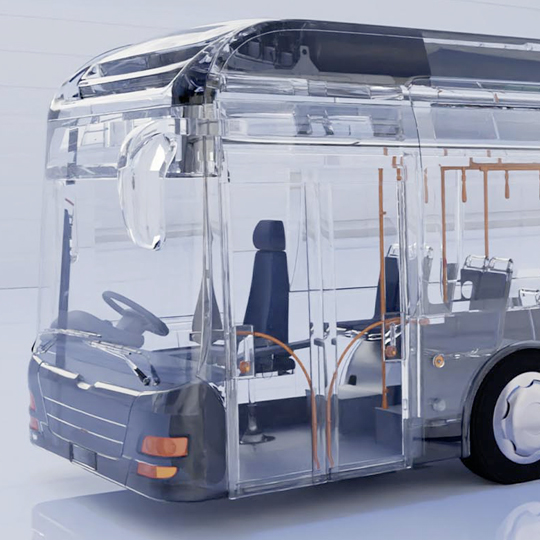
By switching to hydrogen fuel cells on buses and coaches, we can significantly reduce the carbon footprint of the transportation industry, which will empower nations and local authorities to meet their environmental goals.

Hydrogen powered buses rival diesel and petrol fuelled buses in terms of performance and range, while massively cutting harmful emissions. Hydrogen fuel systems replace petrol and diesel engines to create automotive power while only producing water vapour as a by-product.

What is a hydrogen fuel cell bus?

Hydrogen powered buses work by converting hydrogen molecules into energy to charge a battery pack which powers an electric motor.

A hydrogen fuel system is made up of the following on-board components:

  • Hydrogen cylinders
  • Fuel cells
  • Battery pack
  • Electric motor

Here’s how the system works.

  1. The hydrogen is brought from the cylinders into the fuel cells, where the hydrogen molecules are broken down into electrons and protons.
  2. In the fuel cells, the protons (hydrogen ions) pass through a membrane, while the electrons are forced around the outside. The only by-product of this process is water vapour.
  3. The electrons are passed from the fuel cells to charge the battery pack.
  4. The battery pack powers the electric motor, enabling the vehicle to move.

 The efficient design of the system means that significant power can be produced while only harmless water vapour is emitted from the exhaust. This makes the hydrogen fuel system one of the cleanest automotive fuel systems available.

How is hydrogen produced?

While hydrogen powered vehicles are essentially zero emission, the hydrogen production process is not necessarily so. The amount of fossil fuel emissions created by the hydrogen production process depends on the type of process being used.

In 2020, it was reported that 95% of the world’s hydrogen was produced using the steam methane reforming process (SMR). In this method, natural gas reacts with steam at a high temperature to produce hydrogen and carbon monoxide. The carbon monoxide is then passed into a secondary reaction to create more hydrogen and carbon dioxide.

This method requires fossil fuels and can potentially be costly in terms of carbon emissions.

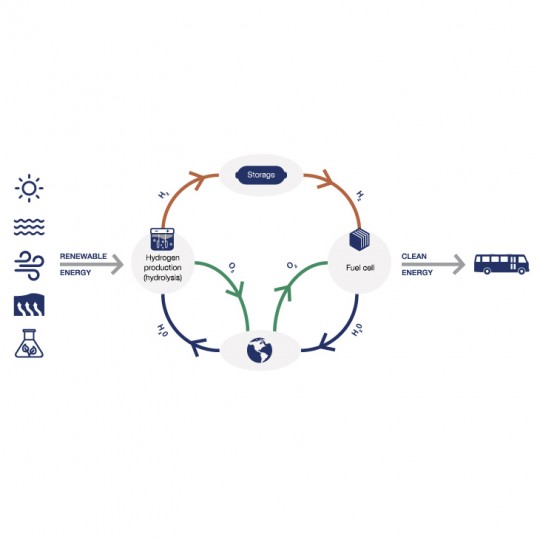
The good news is that there are other, cleaner methods of producing hydrogen, such as the electrolysis of water. This process can be made sustainable - for example, by harnessing electricity from a solar or wind farm - in order to create a zero-emission supply chain.

The goal is to continue to innovate this production process so that all hydrogen production plants are working with net zero emissions in the future.

Are hydrogen buses slower than traditional buses?

Hydrogen fuel cell buses can have the same range and speed as a petrol or diesel powered bus. This isn’t limited to single decker vehicles - this method can also be used to power hydrogen double decker buses. In fact, England’s first fleet of hydrogen powered double deckers was launched in London in June 2021.

On average, a hydrogen bus can travel 350 - 400 miles on a single tank of fuel.

This means that passengers can expect their journey on a hydrogen bus to take no longer than it would on a petrol or diesel powered bus. The journey will likely be more pleasant, too, as the ride is smoother and quieter.

A hydrogen fuel bus can be refuelled quickly and easily on the go. On average, a hydrogen bus takes only 3-5 minutes to refuel. As hydrogen refuelling infrastructure expands, it is becoming increasingly more convenient to refuel hydrogen buses.

Are hydrogen buses safe?

While there are always risks when handling combustible fuels, hydrogen is safe to use for public transportation when guidelines are properly followed.

Petrol and diesel are far more flammable than hydrogen. This is because spilled petrol and diesel pool on the ground, creating a highly flammable surface. Fires caused by the ignition of these fuels can burn at high temperatures for a long time.

Hydrogen, on the other hand, disperses rapidly if spilled, rising up into the air at 72 kilometres per hour. This means that the flammable fuel is quickly dispersed into the atmosphere reducing the chance of it igniting.

If the hydrogen does ignite, it produces flames that generate a low radiant heat and the fire should quickly burn out. This is due to the absence of carbon.

Hydrogen is a colourless, odourless gas, which means it can be hard to spot a spill. However, hydrogen refuelling stations operate strict procedures to prevent accidents, including the use of earthing cables which prevent sparks caused by static electricity.

Buses are also fitted with hydrogen detectors that immediately notify operators should a spill occur.

Overall, hydrogen is considerably safer than petrol and diesel alternatives. Although it is a relatively new fuel source, safety is a high priority in all research and development in this field.

What’s the future of the hydrogen fuel project?

"Hydrogen has an important part to play in the decarbonisation of transport and the reduction in CO2 levels that we need to reach to ensure a net zero future.”

Wrightbus chairman, Jo Bamford.

The Mayor of London, Sadiq Khan, has pledged that from now on all new double decker buses in London will be hydrogen, hybrid or electric. The goal for London is to transform the entire fleet of 9,200 single and double decker buses into zero emission vehicles by 2037.

In March 2021 the UK government announced it will be pouring £54 million into emissions-cutting trucks and buses, with the goal of saving 45 million tonnes of carbon emissions. That’s around the same amount of emissions produced by 1.8 million cars over their lifetimes. The initiative is also set to create nearly 10,000 jobs.

From this budget, £11 million will go to the development of hydrogen buses.

What part does Luxfer play?

Our purpose is to provide bus companies with a cleaner and more efficient alternative to fossil fuels to keep vehicles on the road for longer and reduce operating costs.

We’ve been working closely with manufacturers like Wrightbus to supply hydrogen cylinders for buses. Our collaborative approach saw the launch of the world’s first hydrogen bus in Aberdeen in January 2021.

Hydrogen buses are being introduced in many towns and cities across Europe, and although this technology may be new to most passengers, we have been supplying storage solutions for alternative fuel vehicles for over 30 years.

At Luxfer we provide a full design and build for the complete fuel storage solution, including our lightweight G-Stor H2 Type 3 aluminium lined cylinder wrapped in aerospace-grade carbon fibre, piping, regulation systems and ready-to-fit frames.

All systems are certified to the latest regulations, giving peace of mind to passengers, bus companies and operators alike.

By designing a bespoke system to fit each bus, Luxfer works with manufacturers to provide the optimum balance between capacity and weight. Our system ensures that a bus can complete a full shift without needing to refuel, whilst keeping weight to a minimum.

We believe that hydrogen fuel cells are the best green alternative to petrol and diesel for bus systems, giving the equivalent power, performance and range while dramatically cutting emissions. These systems will help restore clean air in cities and significantly reduce the carbon footprint of the transport industry. We’re excited and inspired to be part of this ever advancing movement.

News:

Come see us this year at the 2021 ACT Expo!

We are Luxfer Gas Cylinders, the leading provider of alternative fuel cylinders worldwide.

We offer a full range of lightweight, high-pressure cylinders for hydrogen and compressed natural gas applications.

Come see us in Long Beach at Booth #1017 on August 31th – September 1st, 2021.

News:

Hydrogen Fuel Revolution

The Future of Fuel

Hydrogen presents an eco-friendly, regenerative and sustainable energy source and is an ideal replacement for fossil fuels in the transportation sector. Here at Luxfer, we have over 30 years of experience working with the gas. We are continually innovating our cylinder and system technologies and specialise in working with forward-thinking companies to harness the full potential of hydrogen power for bespoke transport projects.

As the world’s largest ISO approved manufacturer of lightweight, high-pressure composite and aluminium cylinders and member of the Fuel Cell & Hydrogen Energy Association (FCHEA) and the UK Hydrogen and Fuel Cell Association (UKHFCA), we have unrivalled industry-leading expertise in designing and supplying hydrogen storage systems.

Environmental concerns have focused research and development efforts on hydrogen as an alternative fuel to power the needs of our daily lives. For example, in electric vehicles, it is used to run fuel cells which convert the gas efficiently into electrical energy.

The UK has pledged a green industrial revolution, creating jobs and infrastructure to achieve net-zero emissions by 2050. With our track record in the hydrogen market, and continued investment in our alternative fuel capability, Luxfer Gas Cylinders are committed to playing a central role.

“With the government’s new environmental vision, hydrogen provides a very attractive alternative to diesel transport and electricity,” commented Dr. Mark Lawday, Luxfer’s head of European sales. “Our recent projects are an excellent example of Luxfer’s commitment to a clean, green economy across the globe.”

As demand increases across a wide range of applications in Europe, the focus on hydrogen as a fuel is clearly shifting away from a niche market into one that is much more accessible and expansive. It’s even influencing an international step-change in the approach to decarbonisation efforts.

At Luxfer, we believe in creating a greener world for future generations, and we’re passionate that hydrogen is the key to safe and sustainable transport. We’re working with a number of commercial vehicle manufacturers around the world to supply industry-leading hydrogen cylinders and, in many cases, to design hydrogen fuel systems to meet the highest technological and safety requirements.

What are the benefits of Luxfer hydrogen systems?
  1. Lightness of weight from G-Stor H2 carbon composite cylinder technology increases fuel economy and reduces wear and tear.
  2. Luxfer is ISO 9001 approved and our systems are manufactured in an ECE R110 approved facility.
  3. Cost-saving - 1 gallon of petrol has about the same amount of energy as 1kg of hydrogen.
  4. Quiet operation and fewer moving parts decreases noise pollution and gives a smoother ride.
  5. Zero harmful emissions - when used in a fuel cell, hydrogen produces zero emissions, the only by-product is water vapour.
  6. Range - similar to conventional petrol vehicles, quick and easy to refill: 1-minute for 1kg of hydrogen = 100 km range.
  7. Better performance - high torque and high efficiency from electric drive-train.
  8. Energy conservation – system idles when not in use to preserve energy, a regenerating brake system recycles energy back into the batteries, while an energy storage system provides extra boost for accelerating and tackling inclines.
  9. Lowers sound pollution – quieter vehicles cut noise in urban areas.
How do hydrogen systems work?

Hydrogen-powered vehicles use fuel cells to convert the chemical energy in the gas (stored under pressure in cylinders) to electrical energy via an electrochemical process - fuel cells do not combust hydrogen, but instead combine it with oxygen in a chemical reaction that produces electricity for power. The only tailpipe emission is water.

This process is extremely efficient – nine litres of water can produce one kilogram of hydrogen. And that kilogram of hydrogen contains about 33 kilowatts of energy which, in the case of a small road vehicle, can power the electric motor and achieve a range of around 100 kilometres.

The efficiency of water electrolysis is between about 70-80%, with a goal set to reach 82-86% efficiency by 2030 using proton exchange membrane (PEM) electrolyzers.

If the energy required to produce the hydrogen gas, in the initial instance, comes from a sustainable or renewable source then the potential is practically unlimited. Of course, in reality hydrogen production is still quite reliant on less green methods, but investment in wind, wave, biomass and solar power, combined with our own internal policies on reducing our alternative fuel system manufacturing footprint and recyclable cylinders, will make great strides towards this. Well-to-wheel emissions of a hydrogen fuel-cell car are nonetheless currently about 30% lower than those of a conventional diesel-powered car.

How does a hydrogen fuel cell work?

Fuel cell systems are a clean, efficient, reliable, quiet and scalable power source. There are no moving parts and they do not need to be recharged like batteries and continue to produce electricity as long as fuel is present.

The cell is made up of an anode, cathode, and an electrolyte membrane. Passing hydrogen through the anode splits the hydrogen molecules into electrons and protons. The protons pass through the membrane, while the electrons go into a circuit, generating the electric current. At the cathode, the hydrogen protons and oxygen combine to produce water.

Further efficiencies are achieved in the vehicle design using techniques such as regenerative braking, idle-stop and onboard batteries to store excess energy.

How is the hydrogen stored?

In cylinders, and as part of custom-built systems. Our G-Stor H2 products are the leading line of lightweight, impermeable, high-pressure carbon composite hydrogen-storage cylinders. They are used by some of the world’s largest OEMs that design, develop and manufacture state-of-the-art compressed hydrogen-storage systems for fuel-cell and internal combustion engines.

The G-Stor H2 is also available with our proprietary high-pressure hydrogen electronic solenoid valve, resulting in a certified, cost-effective hydrogen-storage solution that is ideal for transport applications.

G-Stor H2 cylinders are also being used for mobile refuelling systems that provide “instant infrastructure” by making compressed hydrogen immediately accessible to end-users.

European Business Development Manager, Jim Gregory said, “We have been making high-pressure gas storage for 80 years, and we have been at the forefront of every technological advancement in that time. Over the next two years, our industry is going to see a step-change in the variety of new applications for hydrogen in areas we perhaps did not even think of a few years ago.”

Learn more about G-Stor H2 hydrogen cylinders

Hydrogen fuel applications

Hydrogen Buses

Hydrogen Trains

Hydrogen Trucks

Hydrogen Boats